
Welcome to my Mandala page. To a large degree, I think there is a great danger in explaining artwork. It should be left to the eye of the beholder, who is yourself, to see in it and gain from it something that initially attracts you (or not) and from that attraction develop a need or desire, – that many don’t need to understand, – to look at that piece of artwork again and again. In the same way that as people we are drawn to nature, music, theatre, the written word and exercise, over and over.
These things are food for the soul, the heart and the spirit. Which is why, the initial attraction leads to a sense of wellbeing. It is our instinctive nature that draws us to find and maintain a state of wellbeing within ourselves, as this is key to our happiness and our health.
The Mandala is unique in that it has been recognised throughout the world by many Ancient Cultures as a tool with which to go beyond a state of wellbeing and has been used both spiritually and religiously along the journey to enlightenment and healing both for the individual and in many cases in group work.
The psychoanalyst Carl Jung saw the mandala as “a representation of the unconscious self,” and believed his paintings of mandalas enabled him to identify emotional imbalance and work towards wholeness in personality.
The term Mandala is a Sanskrit word (the ancient Indic language of India), and is usually interpreted as meaning “circle”, and sometimes further as “wheel” or “essence”. This Indian origin can often overshadow the wide use of the Mandala by many other cultures, so below is a list. You may be surprised to see that which qualifies as a Mandala:
- Tibetan sand-paintings
- Islamic ceramics, calligraphy, and rug designs
- Celtic knot work
- Christian church stained glass windows
- Native American medicine wheels, dream catchers and labyrinth designs
- Australian Aboriginal paintings
- Maori carvings and tattoo designs
- and famously in designs such as the Mayan Calendar and the Hindu Sri Yantra
- The Chinese I Ching symbolism and symbol for longevity
- Flower of Life Symbol Mandala
Examples of Mandalas are also found in nature: The petals of a flower arranged in a radial way around the centre of the flower. The spider’s web, snowflakes, and cross-sections of tree trunks and fruits. In fact, mandala forms are found throughout the whole of the natural world, from spiral galaxies, to our own cells, to the realm of atoms and subatomic particles.
Focusing on mandalas and their symbolism allows the mind to cease its constant chatter, and our thoughts begin to delve deeper. The mandala gives the chattering mind a point of focus, something to digest, while the Spirit connection is made, and clarity of the heart and soul is reached. For Spiritual Development, working with Mandalas may aid in meditation, or act as a central point of focus for chant or drum work.
But it is ok, if you just like the picture and you don’t need to know why.
I hope you enjoy this page. Please feel free to join my mailing list on my Home Page, if you’d like to be informed when new Mandalas have been added to this page.

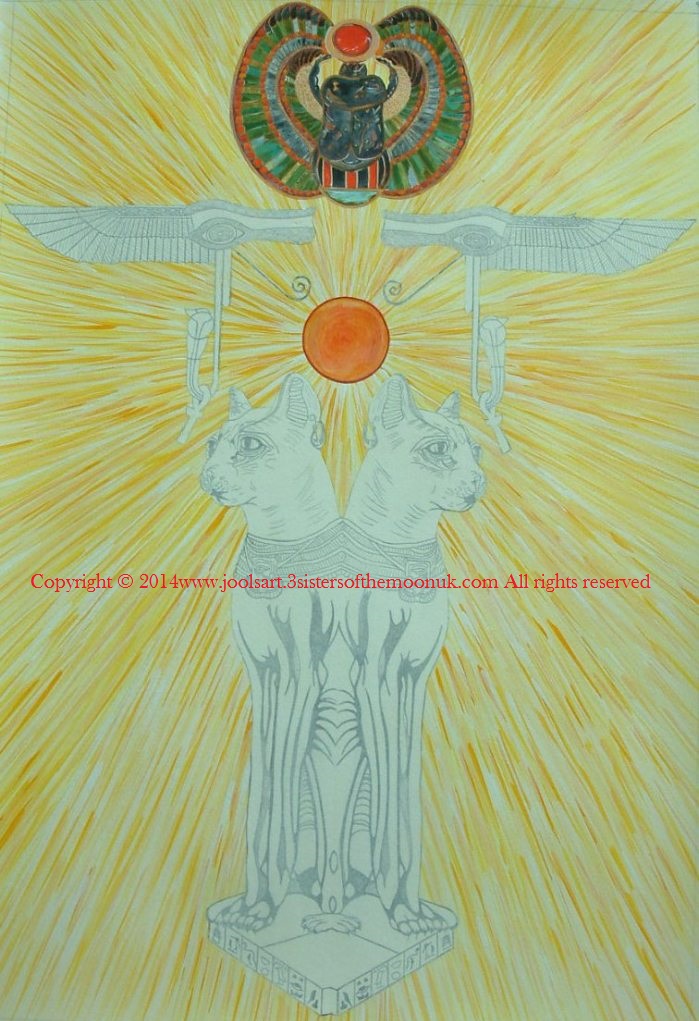
This piece is Called Stealth and Courage. It was inspired in the main by the writings of Shamanic Teacher Lynn V Andrews.
——————————————————————————————————————————————————
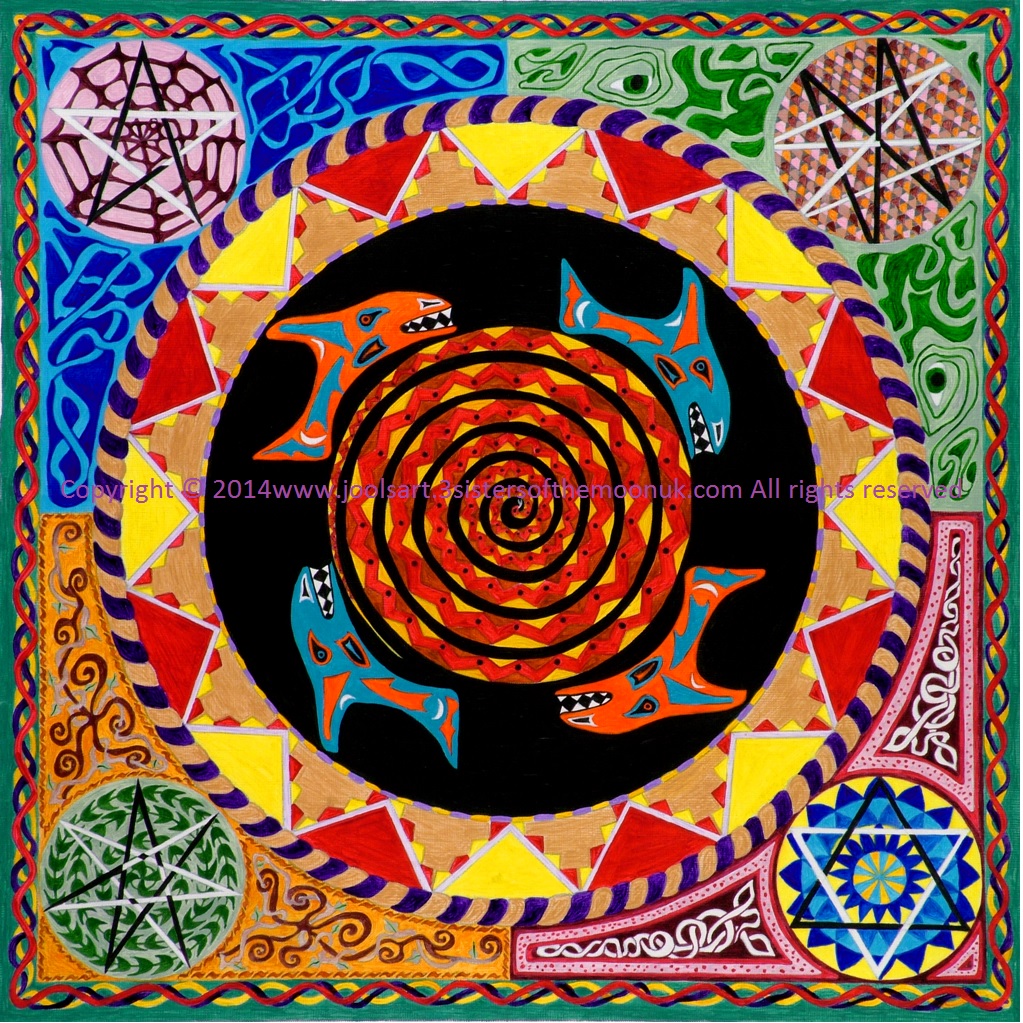
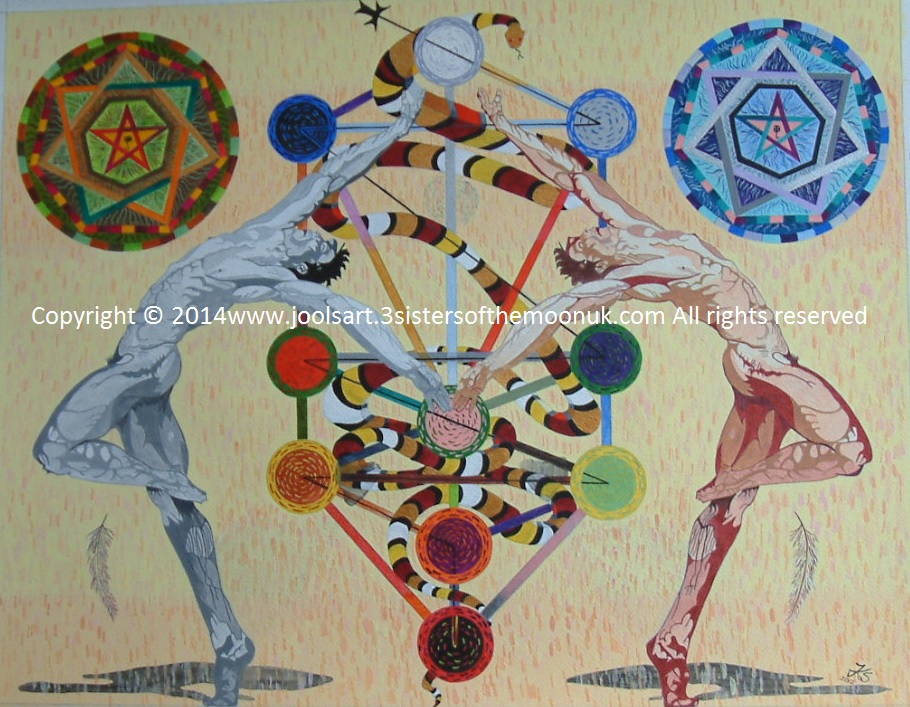
This piece is called Conflict or Cohesion. Created at a time when I was exploring the interconnectedness / separation of different belief systems.
————————————————————————————————————————————————————————————-
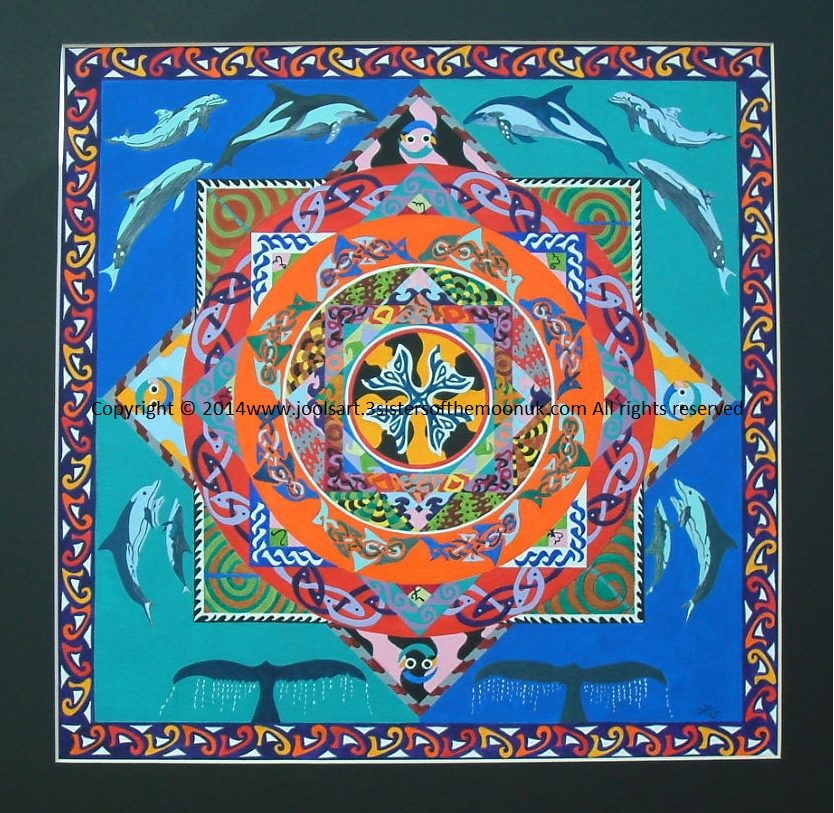
This piece is called simply Dolphin Mandala. It was commissioned by a close friend for use as a healing tool.
—————————————————————————————————————————————————————————————————————————-
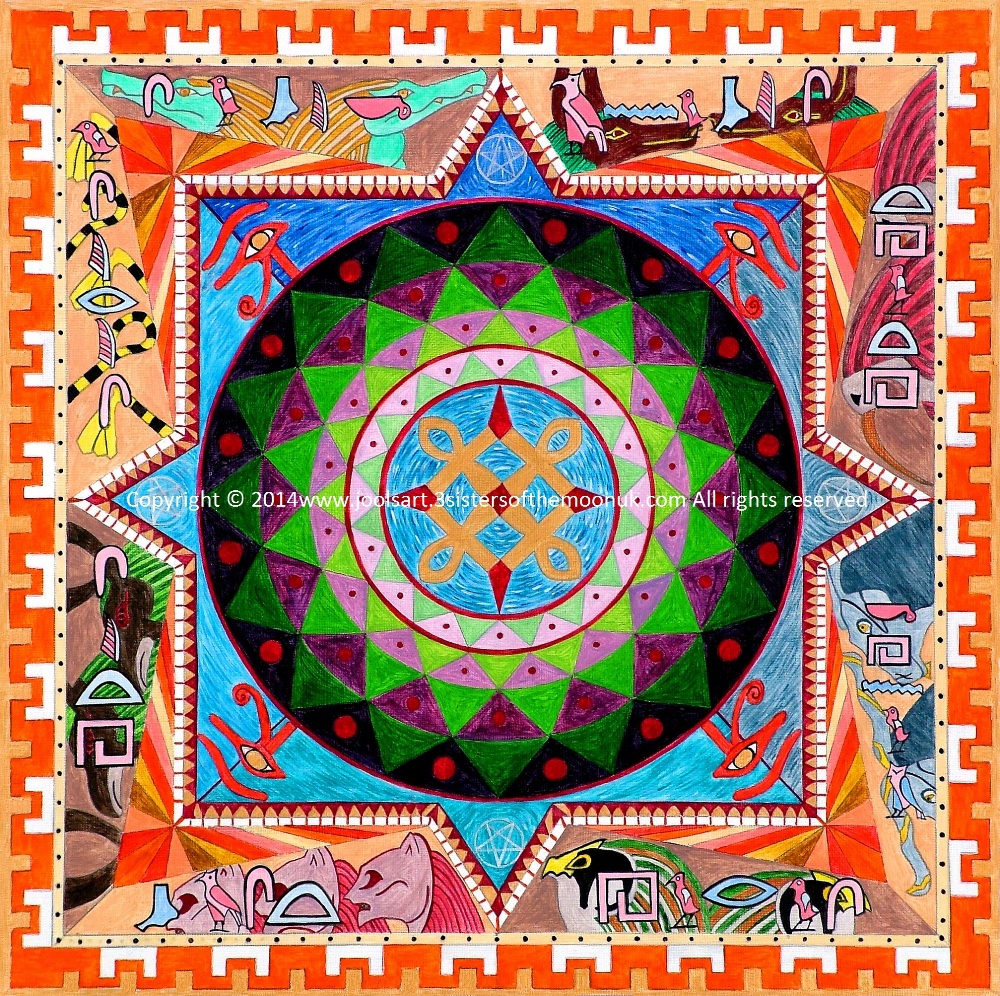

These two pieces and focus on the Gods of Ancient Egypt.
For the piece to the left the colour palette was chosen to mimmick the lushness of the Nile, surrounded by desert.
Perceived both physically and mirrored spiritually.
For the piece to the right the colour palette was changed to see how it changed the energy of the work.
————————————————————————————————————————————————————–
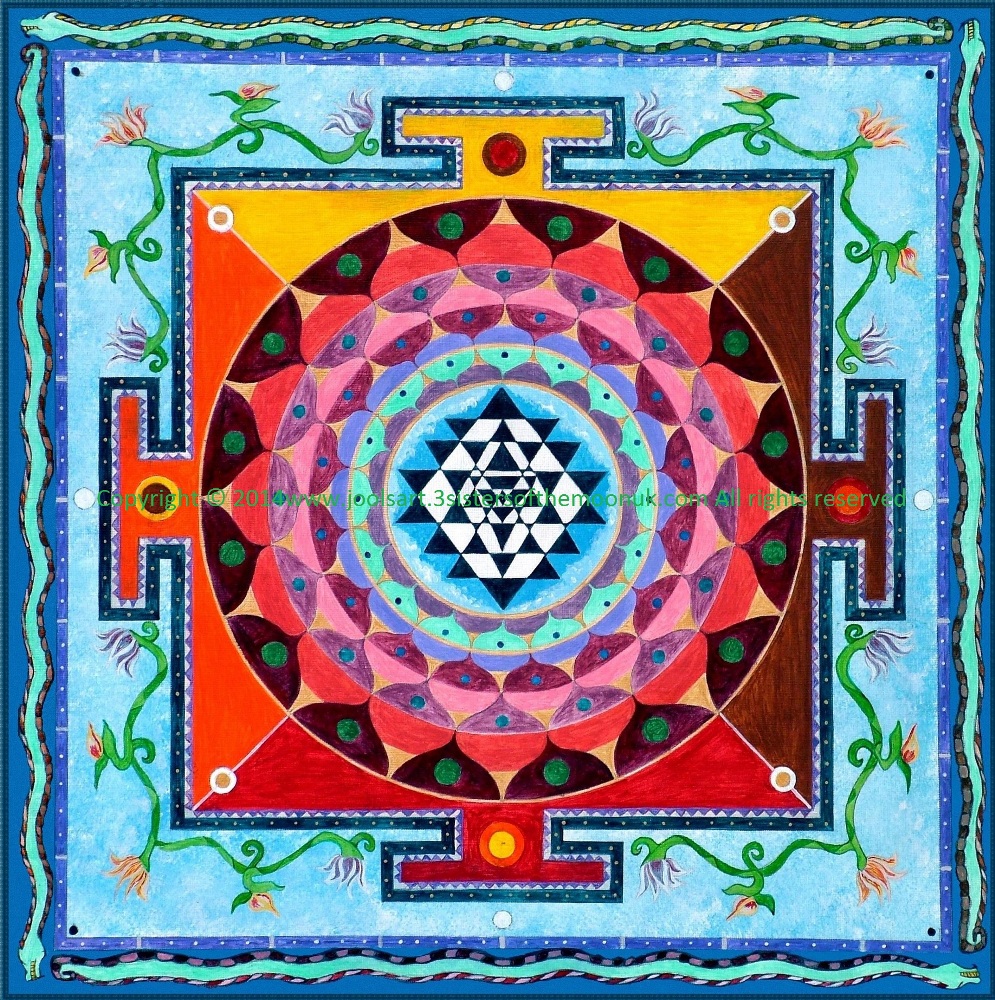
This piece is called Aztec Mandala.
———————————————————————————-

The piece to the left was inspired by the 12 Labours of Hercules.
The colour palette was limited to reflect the energy of the fire element.
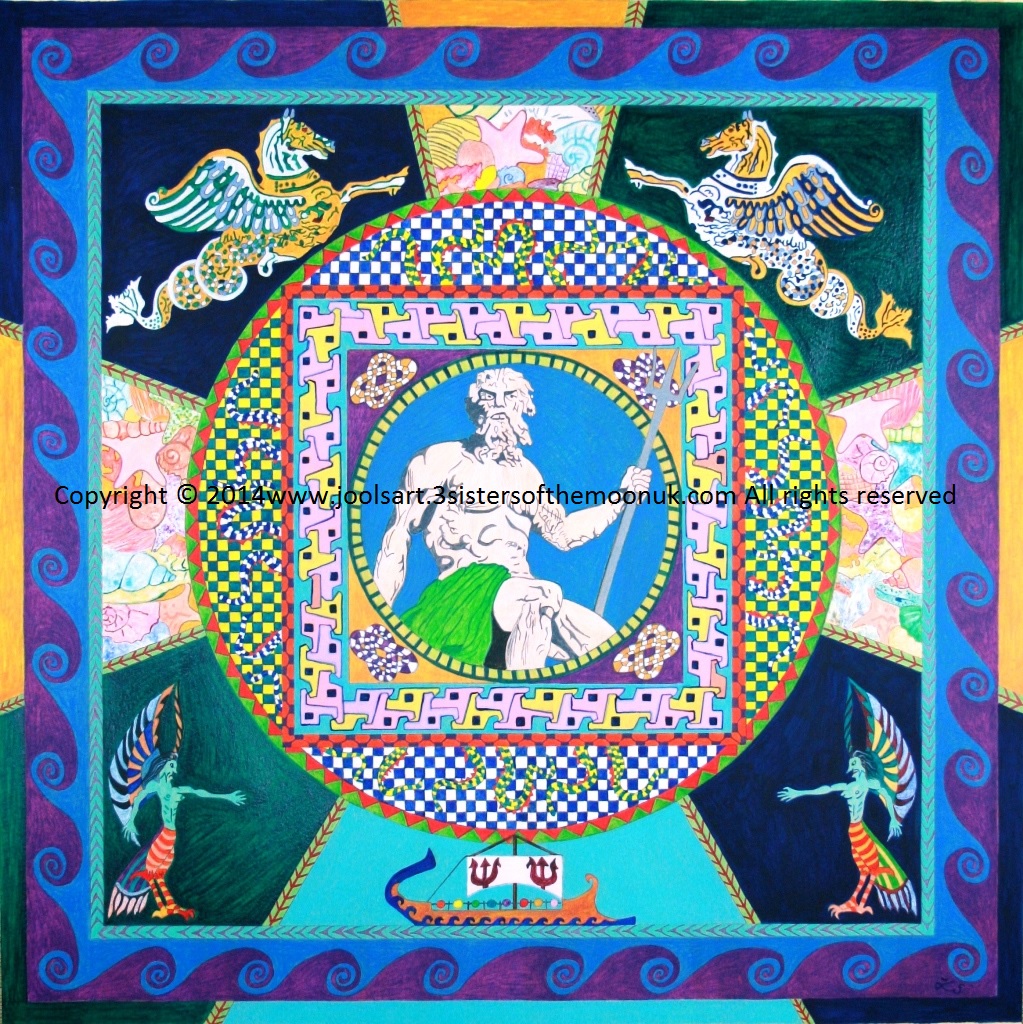
The piece to the right was inspired by Poseidon.
——————————————————————————————————————————————————————–
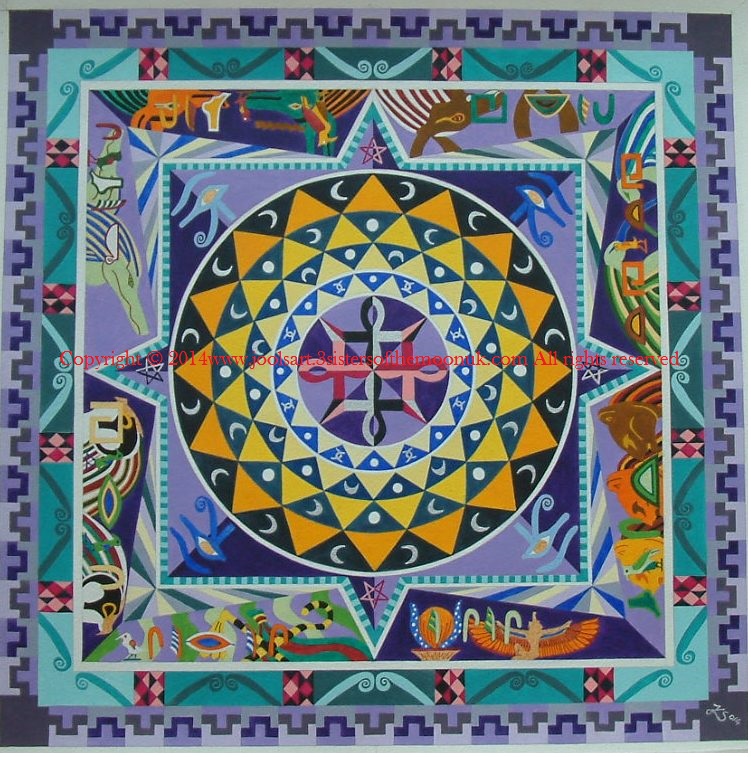
This piece is called Isis Mandala. It’s a progression from two earlier Mandalas of Ancient Egyptian Gods,
but more emphasis has been put on the moon and Isis has been added as a Goddess.
Other subtleties make this very different from my previous works.
———————————————————————————————————————————–
Copyright © 2014www.joolsart.3sistersofthemoonuk.com All rights reserved